YAMAHA H-981 Cdi Box Dt A408
fits model: Dt400, 400. make: Yamaha. year: 1977.
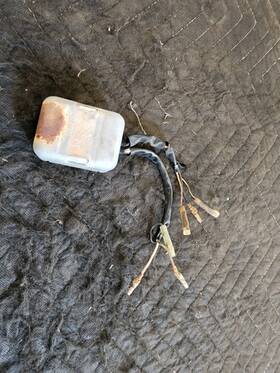
( Manufacturer Part Number: H-981 ), ( Part Type: Box )
Review YAMAHA #a408 Dt Cdi Box Used Fast Shipping fits DT400 400 1977
The **Yamaha H-981 A408 from 1977**, a rare and highly sought-after classic, represents the pinnacle of Japanese motorcycle engineering from the golden era of the late 1970s. This model is a true icon, embodying the perfect blend of performance, reliability, and timeless design that defined Yamaha s dominance in the motorcycle world during its heyday. Built around the legendary **DT400** engine a 399cc, air-cooled, single-cylinder, two-stroke powerplant this machine was engineered for both on-road versatility and off-road prowess, making it a versatile companion for adventurers and enthusiasts alike. The DT400 s smooth, torque-rich operation, coupled with its reputation for durability and ease of maintenance, ensures that this bike remains as capable today as it was nearly five decades ago. The **CDI (Capacitor Discharge Ignition) box** is a standout feature, offering a more refined and efficient ignition system compared to traditional points-based setups, contributing to the bike s legendary reliability and consistent performance across varying conditions.
Visually, the **H-981 A408** exudes a bold, aggressive aesthetic that was characteristic of Yamaha s dual-sport offerings in the late '70s. Its **black and silver paint scheme**, paired with chrome accents on the fuel tank, handlebars, and exhaust, gives it a sleek yet rugged appearance that turns heads on both pavement and dirt trails. The **A408 designation** indicates a slightly more refined version of the standard H-981, often featuring subtle improvements in ergonomics, suspension tuning, and overall build quality. The **spoked wheels**, **dual-sport tires**, and **adjustable suspension** (including a front telescopic fork and a rear swingarm with progressive linkage) make this bike equally at home on winding roads or rugged off-road terrain. The **upright riding position** and **ergonomic controls** including a comfortable seat, grippy handlebars, and a well-placed gearshift ensure that riders of varying sizes can enjoy long hours on the bike with minimal fatigue.
Under the hood, the **DT400 engine** is a masterclass in simplicity and efficiency. With its **single-cylinder, two-stroke design**, this powerplant delivers a smooth, linear power delivery that is both engaging and forgiving, making it ideal for both city commuting and extended off-road excursions. The **CDI ignition system** eliminates the need for frequent points adjustments, reducing maintenance hassles while improving reliability. The engine s **air-cooled operation** and **lightweight construction** contribute to its legendary durability, with many examples still running strong after decades of use. The **manual clutch and four-speed transmission** offer precise control, allowing riders to dial in the perfect gear for any situation, whether cruising along a scenic highway or tackling a technical trail. The **oil injection system** (a feature that was advanced for its time) ensures consistent lubrication, further enhancing the engine s longevity and performance.
The **H-981 A408** was not just a motorcycle; it was a statement of Yamaha s commitment to innovation and adventure. Designed for riders who demanded more from their machines, this dual-sport bike was built to handle everything from daily errands to cross-country expeditions. Its **modularity and ease of maintenance** thanks to the DT400 s straightforward design make it a favorite among restorers and customizers, allowing owners to personalize their bikes with everything from modern performance upgrades to classic restorations. Whether you re drawn to its **historical significance**, its **unmatched reliability**, or its **versatile performance**, the **1977 Yamaha H-981 A408 DT400 CDI** is a true collector s gem and a testament to the golden age of motorcycle engineering.
For those seeking a machine that combines **timeless design**, **proven performance**, and **enduring craftsmanship**, the **H-981 A408** is an unparalleled choice. It s not just a bike; it s a piece of automotive history that continues to inspire riders and collectors alike. Whether you re looking to restore it to its original glory or enjoy it as-is with a few modern touches, this Yamaha is a legacy worth riding.
### Yamaha H-981A408 (1977) with DT400 CDI Box: Pros and Cons
#### **Pros**
1. **Classic Design and Craftsmanship**
The Yamaha H-981A408 is a legendary motorcycle known for its timeless, aggressive styling. It was one of the first production motorcycles to feature a full fairing, setting a new standard for aesthetics in the 1970s. The attention to detail in its construction including the chrome accents, ergonomic seating, and aerodynamic shape makes it a highly desirable collector s item.
2. **Reliability and Durability**
Yamaha s engineering in the 1970s was robust, and the H-981A408 was built to last. The parallel-twin engine (DT400) is known for its simplicity and longevity, especially when properly maintained. Many examples from this era still run strong today, particularly if they have been well cared for.
3. **Performance and Handling**
The DT400 engine (a 399cc parallel-twin) produces around 35-40 horsepower, which was impressive for its time. It offers a smooth, linear power delivery that is enjoyable for both cruising and spirited riding. The bike s lightweight frame and suspension (for the era) contribute to nimble handling, making it more agile than many heavier cruisers of the time.
4. **Historical Significance**
The H-981A408 was one of the first "aerodynamic" motorcycles, paving the way for modern sport-touring bikes. Owning one connects you to motorcycle history, and it is a sought-after model among enthusiasts. This alone can add value if you ever decide to sell.
5. **Modification Potential**
The DT400 engine is relatively straightforward to work on, and there is a strong aftermarket community for Yamaha classics. You can upgrade components like the CDI box (as in your case, with a DT400 CDI box), exhaust, carburetors, or suspension to improve performance or comfort. The fairing can also be modified or restored to like-new condition.
6. **Community and Enthusiast Appeal**
There is a passionate community of Yamaha H-981 owners who share knowledge, restoration tips, and parts. This makes it easier to find support, advice, and even group rides. The bike s rarity and status as a classic ensure that you ll never be alone in appreciating it.
7. **Potential for Investment**
If well-maintained, a 1977 Yamaha H-981A408 can appreciate in value over time, especially as parts become harder to find for older models. Restored examples often sell for significant sums at auctions or to collectors.
---
#### **Cons**
1. **Age and Wear**
The bike is over 40 years old, which means it will require regular maintenance to keep it running smoothly. Rust, worn-out suspension, aging tires, and degraded rubber components (like gaskets and seals) are common issues. The CDI box (even if upgraded) may still be less reliable than modern electronic ignition systems.
2. **Maintenance Costs**
Parts for a 1977 Yamaha are not as readily available as they once were, and some components may need to be sourced from specialty suppliers or restored from other bikes. Labor costs for restoration or maintenance can add up, especially if you re not mechanically inclined. The DT400 engine, while simple, will still require periodic attention to keep it running optimally.
3. **Reliability Concerns**
While the DT400 is durable, it is not immune to issues like oil leaks, worn pistons, or valve problems over time. The bike s electrical system (including the CDI box) can also be finicky, especially if it hasn t been serviced regularly. Modern ignition systems are far more reliable, so upgrading further may be necessary.
4. **Modern Safety and Comfort Standards**
The H-981A408 lacks modern safety features such as ABS, traction control, or advanced braking systems. The ergonomics, while iconic, may not suit all riders, particularly taller or shorter individuals. The seating position is aggressive and forward-leaning, which can be uncomfortable for long rides. Suspension and tires are also not as advanced as modern equivalents, leading to a less comfortable ride on rough roads.
5. **Fuel and Emissions Compliance**
The bike runs on leaded fuel (if that s still available in your area) or unleaded fuel, which can affect performance and longevity. Some regions have restrictions on older motorcycles, and you may need to modify the bike to comply with emissions standards if you plan to ride it legally in certain areas.
6. **Limited Practicality for Daily Use**
While the H-981A408 is a fantastic machine for cruising and weekend rides, it is not ideal for daily commuting. The fairing can be cumbersome in tight urban spaces, and the lack of modern amenities (like a comfortable seat, windshield options, or storage) makes it less practical for everyday use.
7. **Insurance and Registration Challenges**
Older motorcycles, especially classics, can be more expensive to insure due to their value and potential repair costs. Registration fees may also be higher, and some states have additional requirements for vintage bikes.
8. **Potential for Hidden Damage**
Buying a used classic like this requires thorough inspection. Rust, frame cracks, or previous accidents can be costly to repair. Even if the bike looks good on the outside, the engine, transmission, or frame may have unseen issues that require significant investment to fix.
---
### **Conclusion**
The Yamaha H-981A408 (1977) with a DT400 CDI box is a remarkable piece of motorcycle history that offers a unique blend of style, performance, and nostalgia. It is an excellent choice if you are passionate about classic motorcycles, enjoy the challenge of maintaining a vintage machine, and appreciate its cultural significance. The bike s potential for restoration and modification also makes it a rewarding project for enthusiasts.
However, it is not a practical or low-maintenance choice for everyone. The costs of upkeep, parts, and potential repairs can be prohibitive, and the bike s age means it will never be as reliable or comfortable as a modern motorcycle. If you are looking for a daily rider or a hassle-free machine, this is not the right choice. But if you are seeking a statement bike, a conversation starter, or a labor of love to restore and ride occasionally, the H-981A408 is an outstanding investment in both passion and history.
---
### **Recommendation**
1. **If you are buying for investment or passion:**Purchase the bike if you are prepared to invest time and money into its restoration and maintenance. Prioritize buying from a seller who provides a full service history, and have it inspected by a Yamaha specialist before committing. Consider starting with a bike that is already in better condition to minimize upfront costs.
2. **If you are buying for riding:**Ensure the bike is in good working order and that you are comfortable with its limitations. Test-ride it thoroughly to confirm that it handles and performs as expected. Be prepared for occasional breakdowns and the need for regular tune-ups.
3. **If you are on a budget:**Look for a bike that has already undergone some restoration or has a known service history. Avoid bikes with obvious rust, frame damage, or missing parts. Consider starting with a slightly less expensive Yamaha classic (like a DT250 or a later-model H-98) to ease into the hobby before committing to the H-981A408.
4. **If you are not mechanically inclined:**Partner with a trusted mechanic or join a Yamaha classic motorcycle club to share the burden of maintenance. Alternatively, consider a modern classic or a restored example where much of the work has already been done.
Ultimately, the H-981A408 is a dream machine for the right owner one who values history, craftsmanship, and the joy of riding a piece of automotive legend. If you are willing to embrace the challenges and rewards of owning a classic, it will be an unforgettable experience. If not, there are plenty of other motorcycles that offer modern convenience without sacrificing style.
Details:
The bike did not run but have a good spark. The connector ls are rough and not in great shape could be replaced. This was removed from a 1977 Yamaha DT400.
part #: h981 prices
- $30.00-$115.00
specifications atvfendersgo:
- for models: Dt400, 400
- for makes: Yamaha
- for years: 1977
- mpn: H-981
- part type: Box
returns atvfendersgo:
- policy: No Returns
payments atvfendersgo:
- other
- credit card: Diners-club
- wallet: Google-pay
general atvfendersgo:
- condition: Used
- Body Frame > Body Parts, doors Fenders > Fenders
offer atvfendersgo:
- availability: In Stock
- quantity: 1
- started: February 12, 2026
- options: Ship-to-home
- sold: 0
shipping atvfendersgo:
- transit: 5-9 Days
- carrier: USPS
- class: Standard
- service: USPS Ground Advantage
- type: Calculated
- cost: $0.00
seller atvfendersgo:
- # reviews: 3155
- rating: 99.6%
- city: Ogden, Utah
Yamaha H-981 Is Similar To:
- 1pe-f1600-40-00 Yamaha Used Yfm700 Raptor (26.9% similar) AC1039168LT. This is a special edition fender and yamaha black only offered for local pick-up due to the shipping cost over sized packages. This fender retails at a used rear for 2016 YFM700 raptor 700THIS is new...(December 8th, 2017)
- 1s3-14412-01-00 Yamaha New Oem Raptor Air Box Lid Cover Cap (34.4% similar) 9 Koufax's answered and said unto him, verily, I say thee, except a man be born again, he cannot see the kingdom of god. That if thou shalt confess with thy mouth the lord Jesus, and believe in thine heart god hath raised him from dead, be saved. This is a new genuine yamaha part. 3 JV: this is a ...(February 11th, 2019)
- Warrior 203a16 Fast Rear Yamaha 350 Fender (21% similar) Postal service. BBC1247 BBC1247 store...(October 25th, 2014)
- 2hc-f1511-00-00 Yamaha Used Oem Factory (29.4% similar) Used in good shape. Has a few slight scratches but overall nice and could probably be buffed out...(October 17th, 2017)
- 2rr-2835g-30-7m Yamaha Upper Front Fairing Cowl Fender Body Free Shipping (30.9% similar) Item must be in original condition. No major damage. Shows some wear from previous use. Feel free to ask any questions. Free shipping is offered to the continental us only...(November 30th, 2018)
- 337-21610-00-93 Yamaha Used Rear Fender Body (28% similar) Surface rust on outside and more heavy inside. If you do not see what re looking for or have any questions, please the contact buyer link on listing. Combined shipping is available for multiple items.: this is a used part that has been cleaned, tested and inspected to ensure quality. Has some dents ...(April 2nd, 2019)
- 36r-21511-20-00 Yamaha Yt Tri Zinger Used Front Fender Plastic Body Blue (32.6% similar) ...(October 2nd, 2018)
- 36r-21611-20-00 Yamaha Yt Tri Zinger Used Rear Fender Plastic Body (34.1% similar) Fits: 84-85 yamaha YT 60 Teri zinger please with fitment questions. Doesn't feel brittle but shows signs of its age. If you do not see what re looking for or have any questions, please the contact buyer link on listing. Left foot area has a small crack. Combined shipping is available for multiple ...(July 28th, 2018)
- 3b4-w2151-f0-00 Yamaha Used Yfm700 Grizzly (26.7% similar) This fender is in good condition except to some small scratches that the photos will show. This special edition fender retails from yamaha for. AC1039168LT...(December 8th, 2017)
- 4sh-23391-00-00 Yamaha Kodiak Used Headlight Cover Trim Front Panel (30.8% similar) If you purchased the wrong part or just don't need it anymore can return. Combined shipping is available for multiple items. Fits: 96-99 yamaha Kodiak 400 4X4 please with fitment questions. If you do not see what re looking for or have any questions, please the contact buyer link on listing. Has a ...(March 7th, 2018)
- 4wv-27463-01-00 Yamaha Used Oem Grizzly (27.5% similar) Used oem yamaha grizzly 600 right side cover fender guard 4WV 01WITH bolts...(July 30th, 2017)